
Genesis 1: 27 reveals that God created man in His image to secure his love, service, and glorification forever in Heaven. Henceforth, Satan felt great resentment against man and resolved to prevent him from getting this captivating position in heaven. Consequently, Satan cunningly entices him to sin by eating the ‘forbidden fruit’ from the Garden of Eden. This led to man’s damnation and banishment from the Garden of Eden by God (Genesis 3:23).
However, owing to God’s great love for man, He sent His only son (Jesus) to redeem mankind through the son’s death on the cross. Nevertheless, due to man’s weakness and above all, the maliciousness and capriciousness of man’s eternal enemy (the devil), man continued to sin. But, due to God’s mercy, He allowed man to be cleansed of all sins and punishment under His eternal divine mercy. Thus, at Easter man is redeemed through Jesus’ death on the cross during the feast day of divine mercy after Easter. Man is given the opportunity to cleanse himself of all his sins and punishment. Here, divine mercy becomes the road God uses to meet a sinner
St. Maria Faustina, born in Poland in 1905, was specially chosen to promote divine mercy. She was assigned the role of “secretary” to divine mercy by our Lord Jesus Christ. She is reported to have communed directly with Jesus and as His Secretary, she summarised and recorded the conversations with Our Lord in her Diary: Divine Mercy in My Soul, which forms an important reference to the divine mercy way of life. The Diary of Divine Mercy was formally approved by the Church in 2000 after editorial enhancement by the Marian Fathers of the Immaculate Conception (USA).
The diary provides five pillars as guidelines for the divine mercy way of life:
The Feast of the Divine Mercy is celebrated on the second Sunday after Easter. It is considered as a “refuge” and “shelter” for all souls, especially the poor sinners (Diary 699, 1517). According to the text entry No. 699, in the diary of St. Maria Faustina, on this day Jesus grants mankind complete forgiveness of sins and punishment. Indeed, Jesus’s mercies for this day are mentioned fourteen (14) times in the diary.
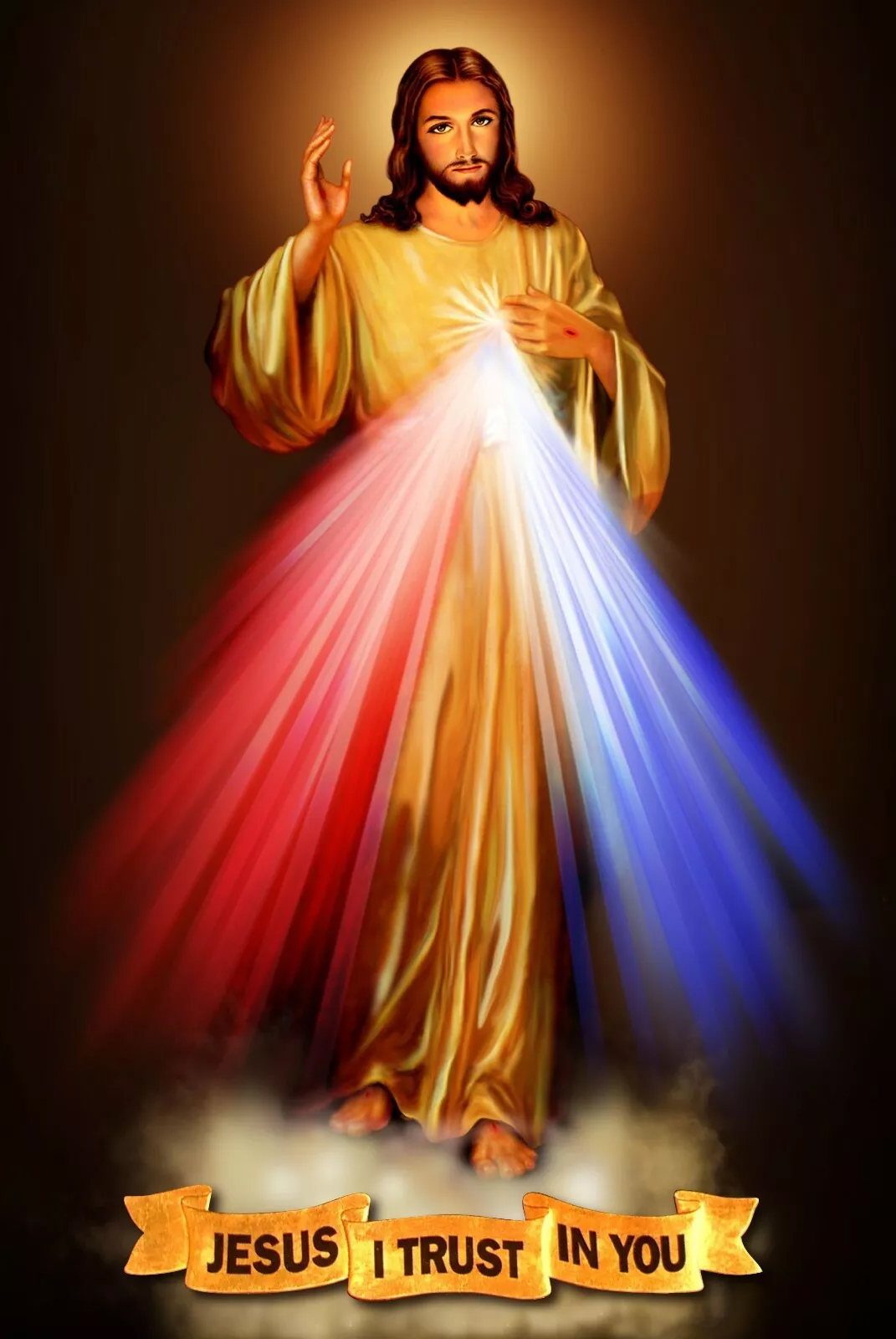
During the evening of 22nd February 1931, St. Faustina while in her room, probably meditating about the readings of the day, Jesus appeared and said “Paint the image according to the pattern you see and put my signature “Jesus! I trust in You”. He assured and promised St. Faustina that the souls that will “venerate” his image will not perish. Here, Jesus was not commanding man to worship his image but to “venerate” it as we venerate photos of our dear ones. In the image, red symbolises the blood of Jesus (love) while pale is for water which cleanses souls. Indeed, the image is a treasure that all of us would be proud to have in our respective offices.
This is a privileged time when our Lord died on the cross (3 p.m.) for the forgiveness of our sins and those of the whole world. It is an hour of great mercy at which Christians entreat God for forgiveness and for special graces by reciting special prayers prepared for the hour.
The Chaplet of Divine Mercy is recited using beads of the ordinary Rosary covering five decades. When we recite the chaplet, we carry all souls on our back to Jesus; we take the souls of those we are praying for to the feet of Jesus. From the dairy text entry No. 811, in the diary of St. Maria Faustina, Jesus tells St. Faustina that when we recite the chaplet for ourselves or for others we receive valuable indulgencies. And again in the diary text No. 687 Jesus requests priests to recommend this chaplet to all people as their ‘last hope of salvation.’